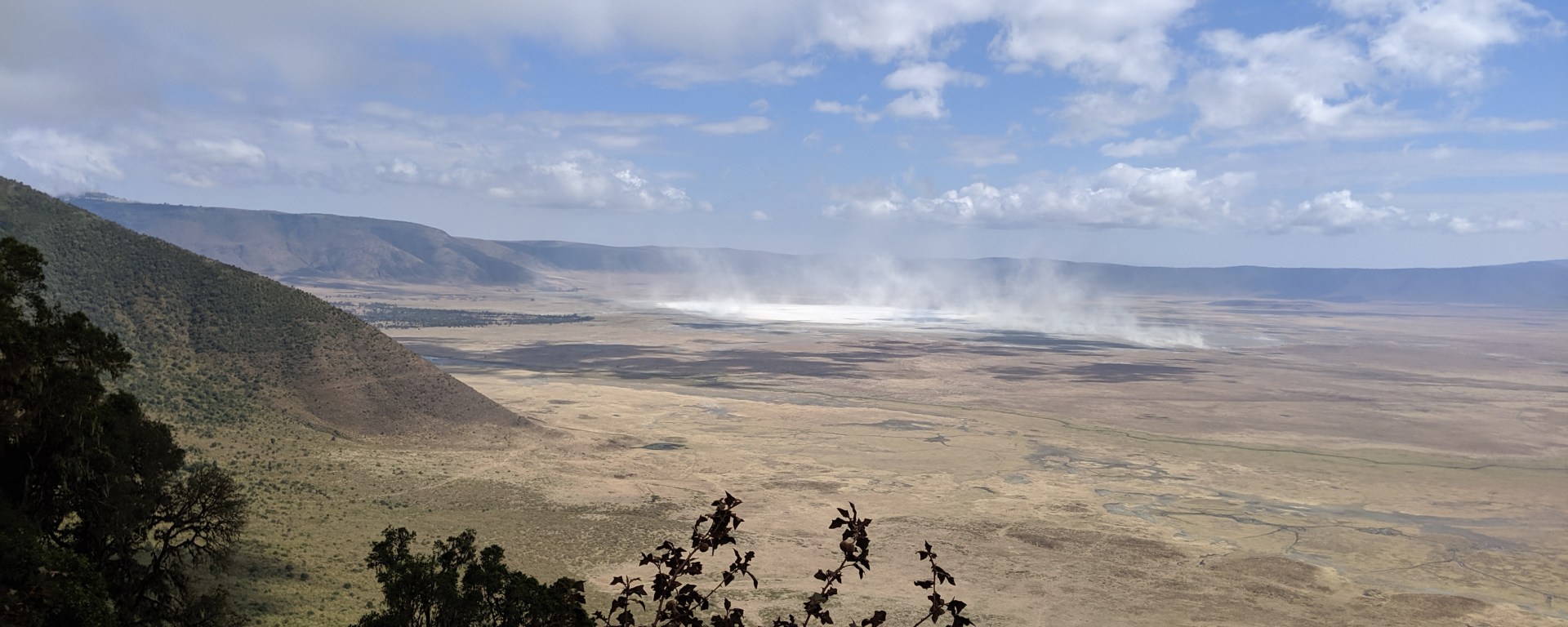
The Ngorongoro crater is one of the world’s largest calderas (collapsed volcano) and a UNESCO World Heritage Site. Located in the Ngorongoro Conservation Area, it is home to many animals and birds, across varying terrains of its elevation.
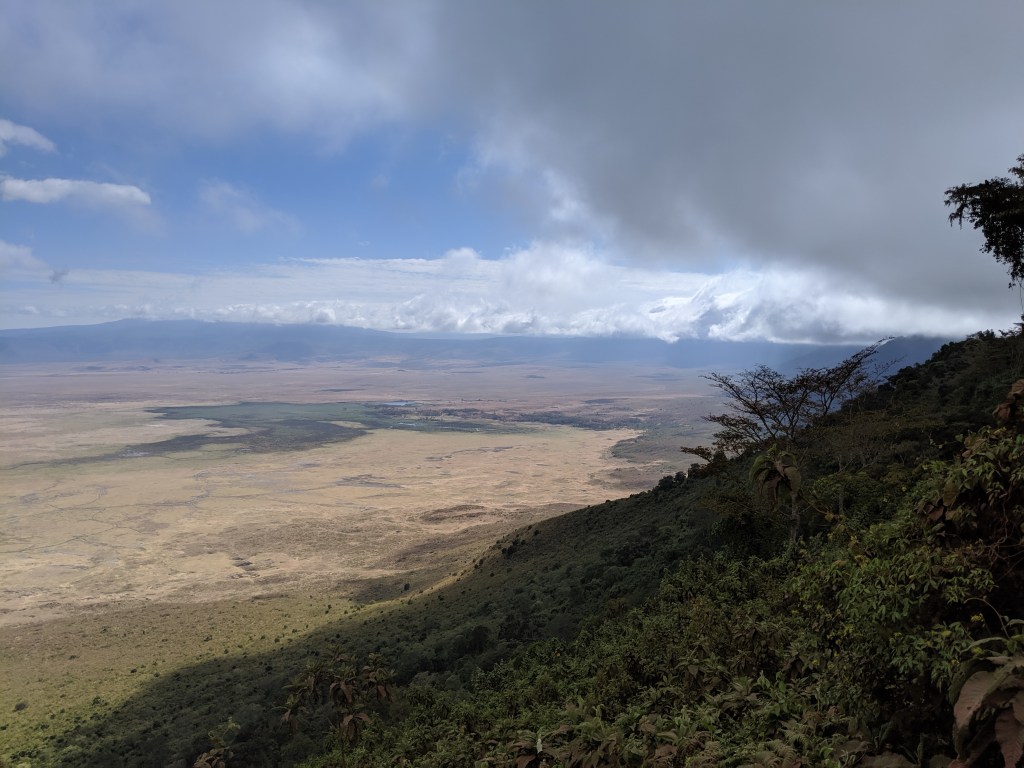
Looking at the crater floor from the overlook
On the second day of our safari trip, we drove through the Ngorongoro Conservation Area on our way to Serengeti, stopping at the crater rim overlook to get our first glimpse of the crater. It is an impressive sight – you can see lakes, forests, and plains down in the crater, with forest lining the rim from top to bottom.
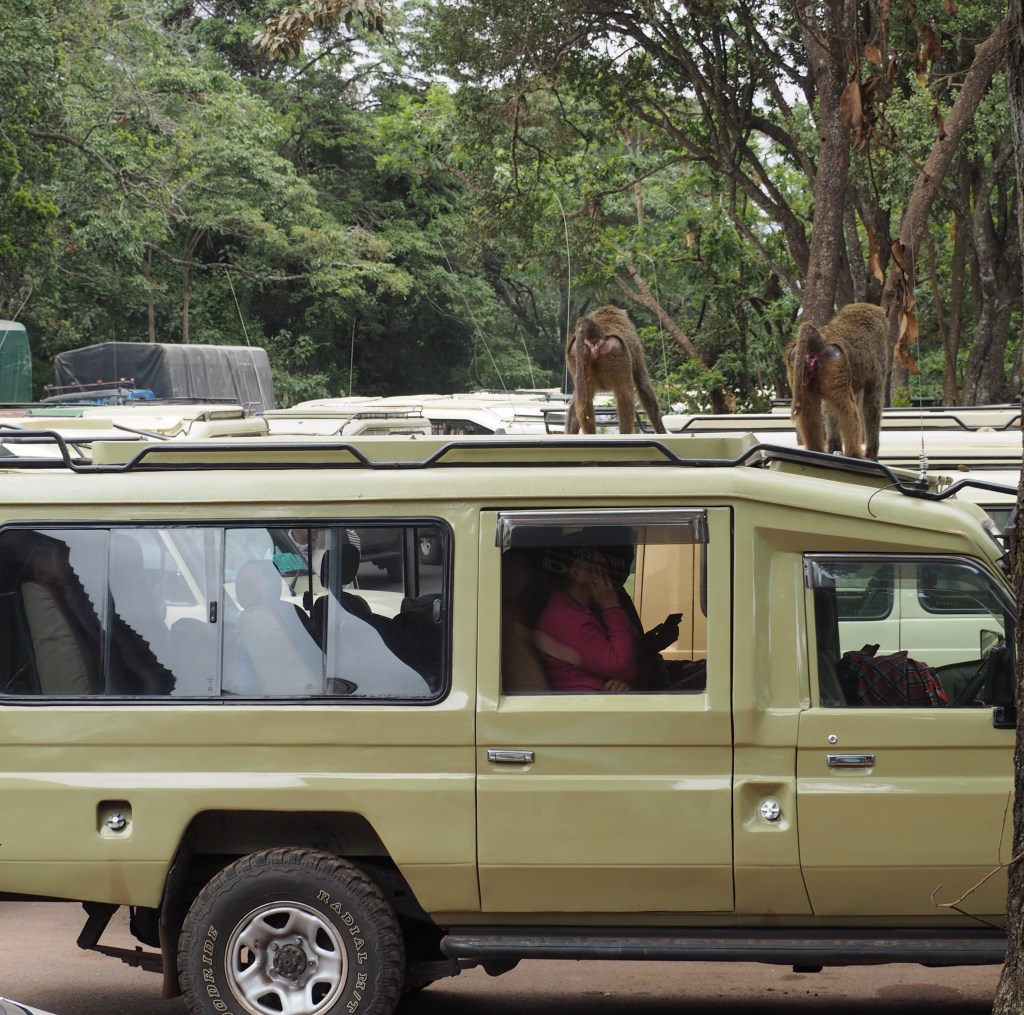
The entrance to the Ngorongoro area gets very congested in the early mornings as many cars drive to the crater or towards Serengeti each day. The drivers take care of the permits/registration while tourists can browse the information area, grab a coffee, purchase souvenirs and snacks, or watch the monkeys as they try to steal food from unsuspecting people.
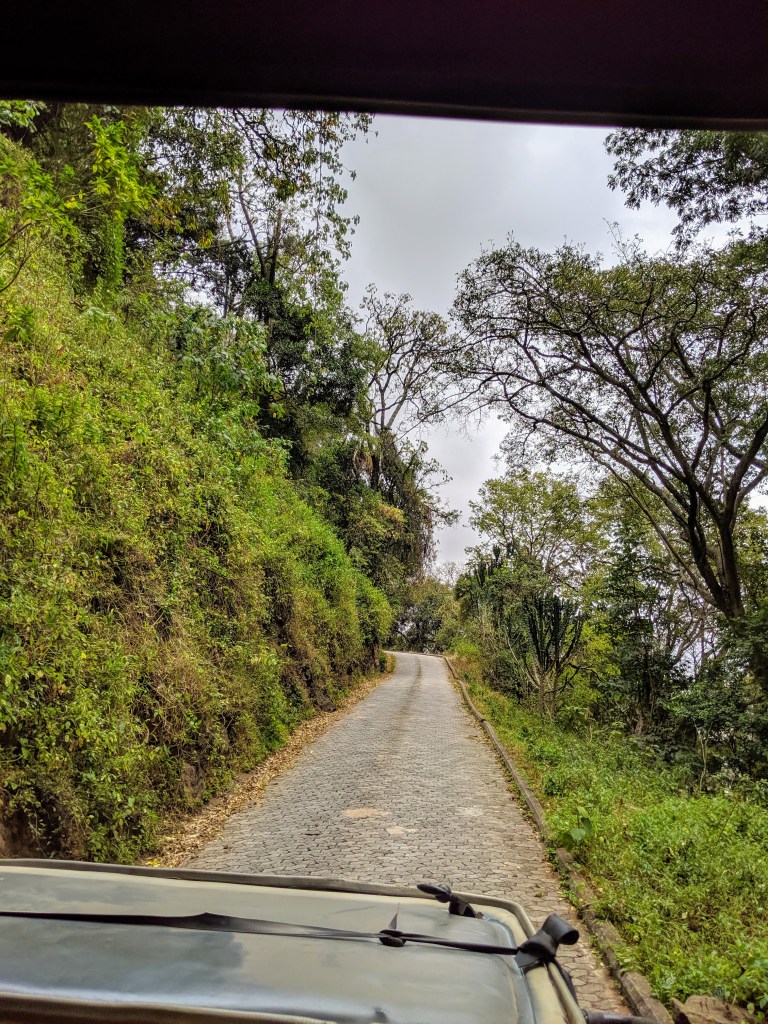
Once you cross the entrance gate, the road continues climbing up to the rim of the crater, arriving at an outlook that provides spectacular views of the crater floor as well as the other side of the rim, facing Lake Manyara. The views on the drive up alone are already amazing as the vegetation gets thicker.
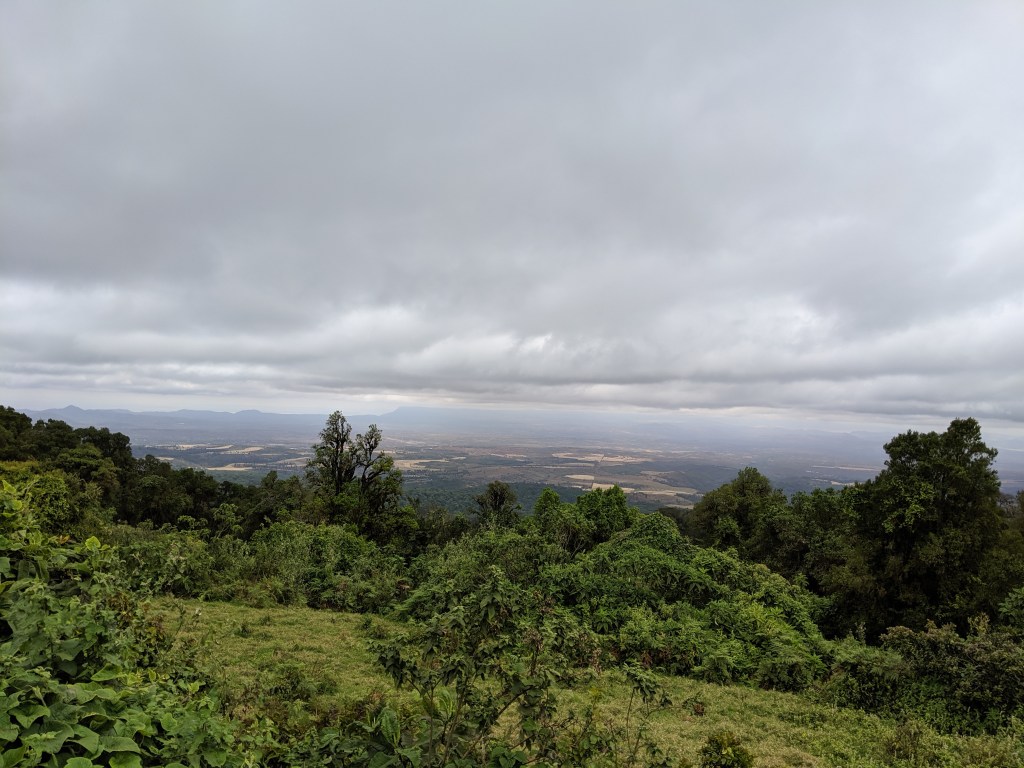
Looking back at Lake Manyara 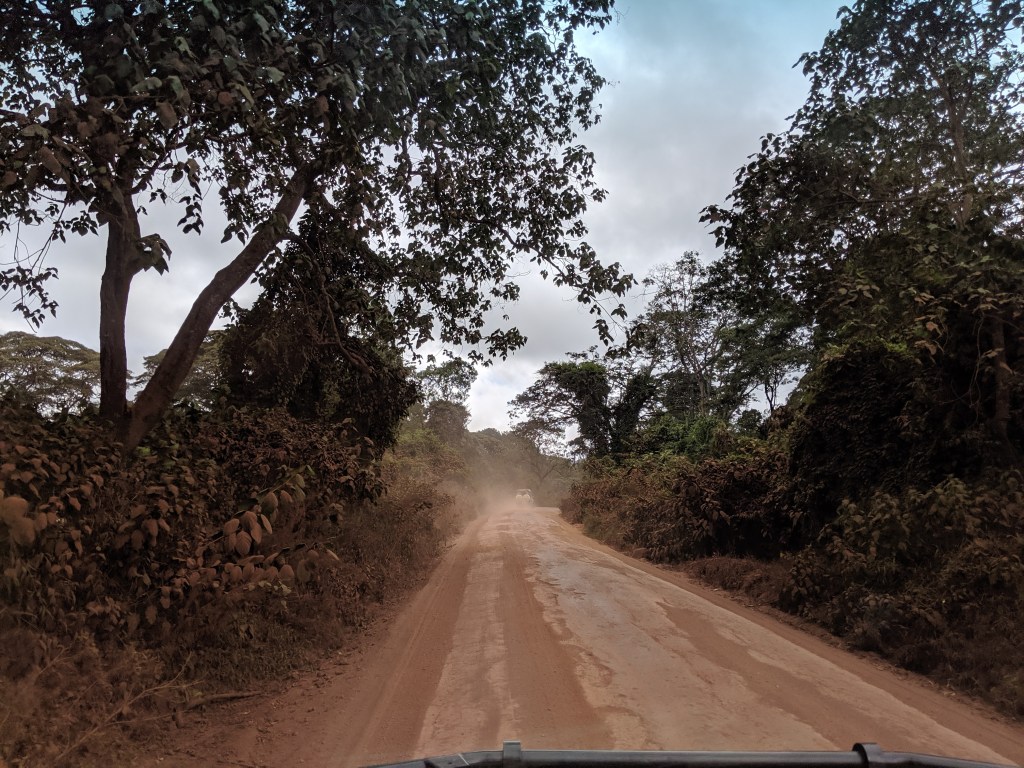
The road up to Ngorongoro Crater rim
The drive continued through the conservation area, passing by zebras, birds, and many Maasai with their cattle.
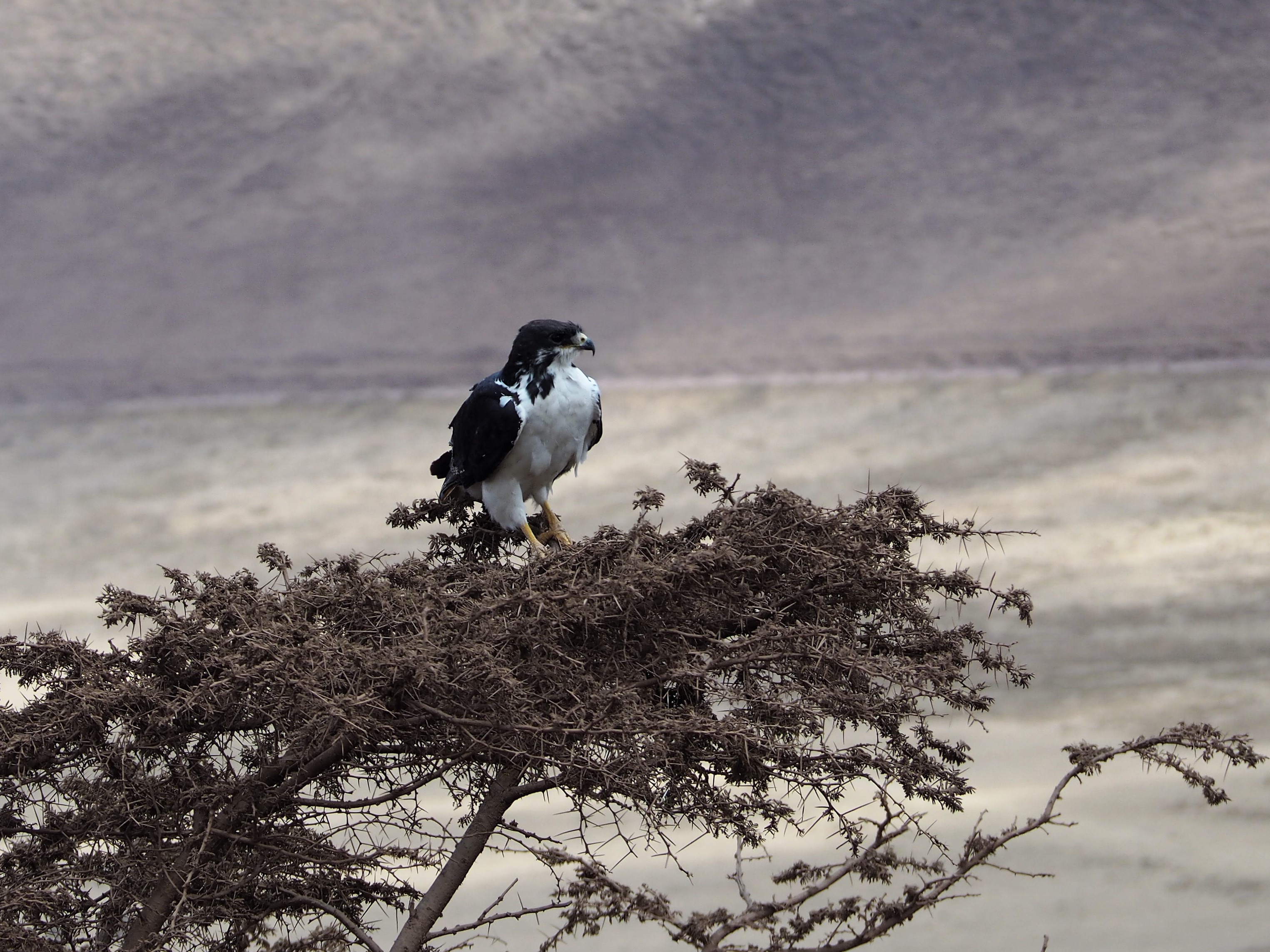
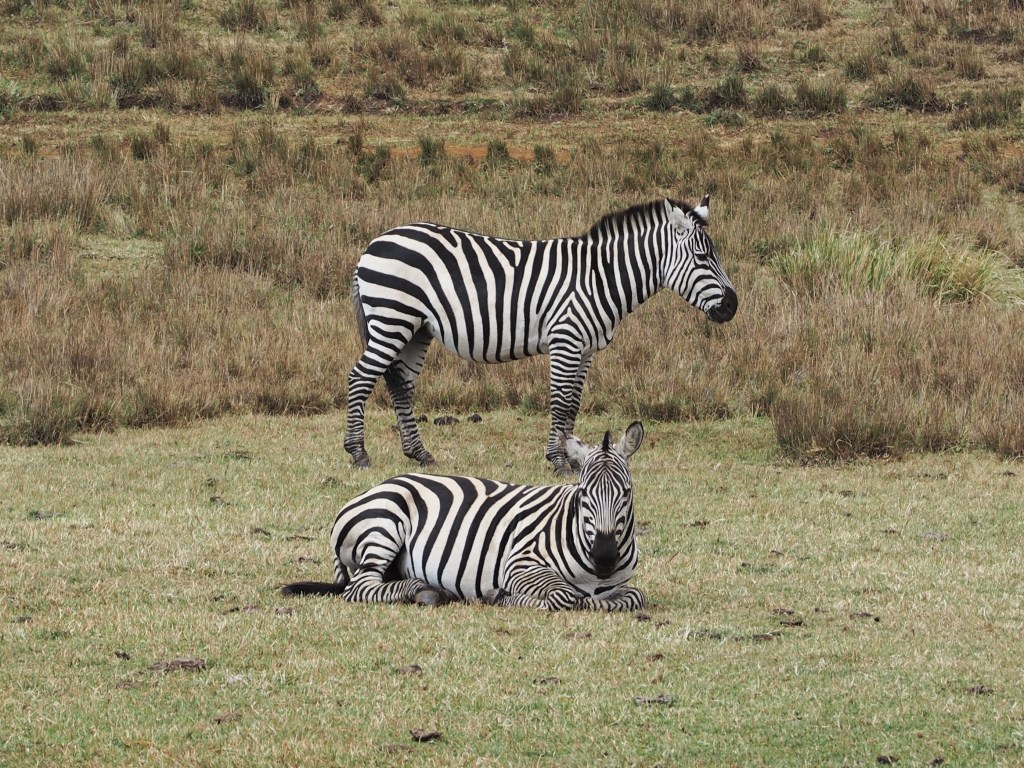
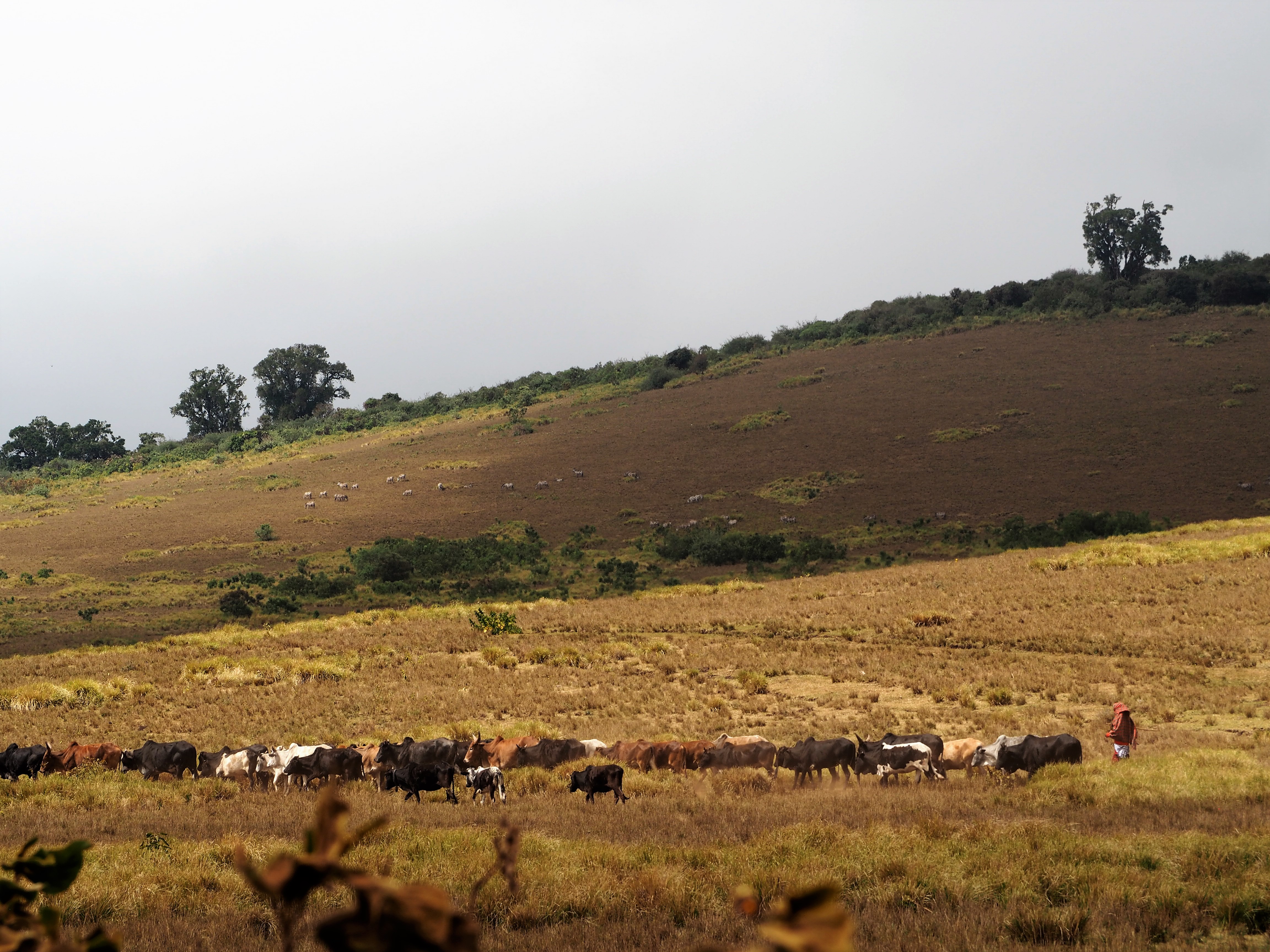
Cattle herding in the Ngorongoro Conservation Area
On day 5 of our safari itinerary we returned to the Ngorongoro Conservation Area and stayed at the Ngorongoro Wildlife Lodge, which was the first lodge ever opened within the conservation area in 1959. It has an amazing view of the crater floor, especially in the hour leading up to the sunset. You can enjoy this view from the common area balcony or from your own room.
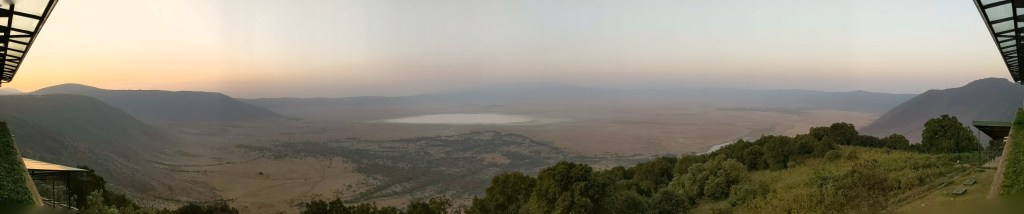
The lodge has a large lounge area with a bar and plenty of seating. The adjacent dining area is set up for buffet meals, with many different options offered each day including the traditional ugali that we finally got to try (often times made of corn, round shaped, and cooked/served in a sauce – in our case, tomato).
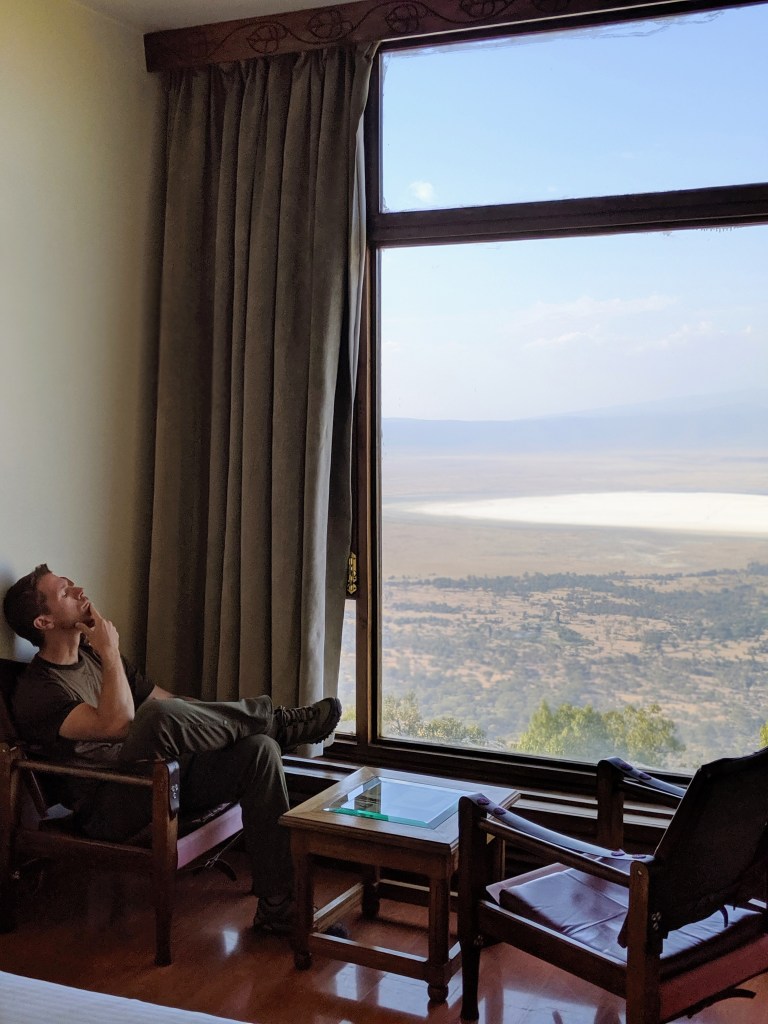
The crater view from our room 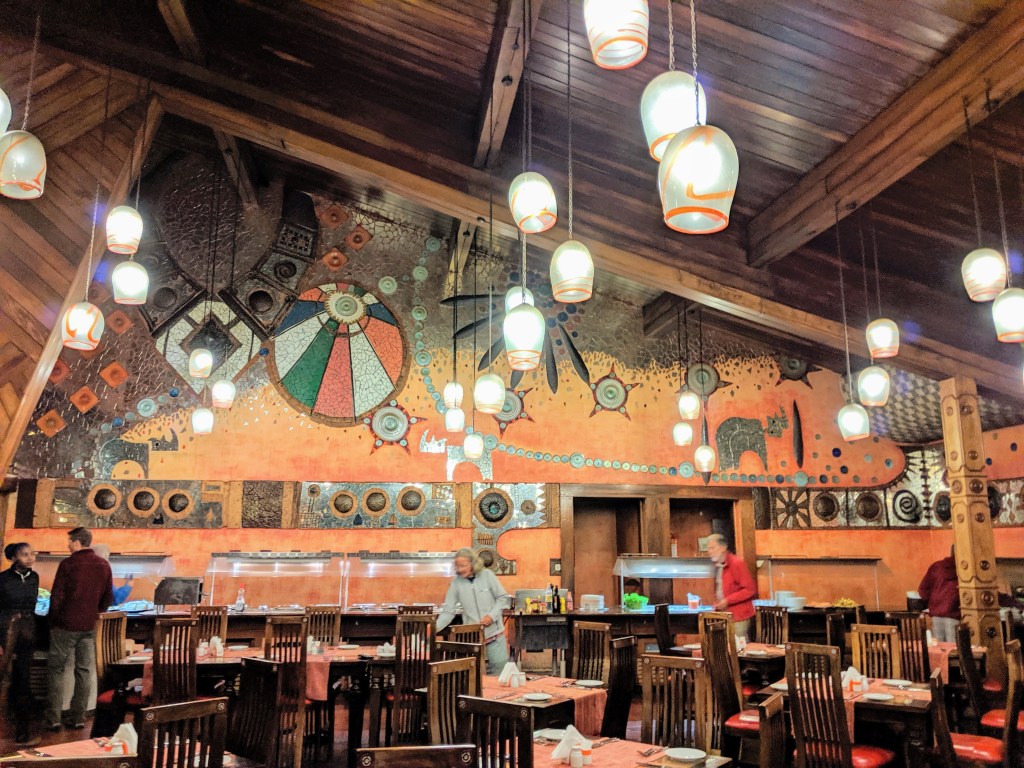
Dining area
The next morning we departed for the crater around 6:30 am. It was only about a 25 minute drive from the lodge to the Seneto descent road – only one read goes into the crater, and one road comes out. Traffic within the crater is controlled is through a self-imposed time limit of 6 hours for each vehicle that heads down.
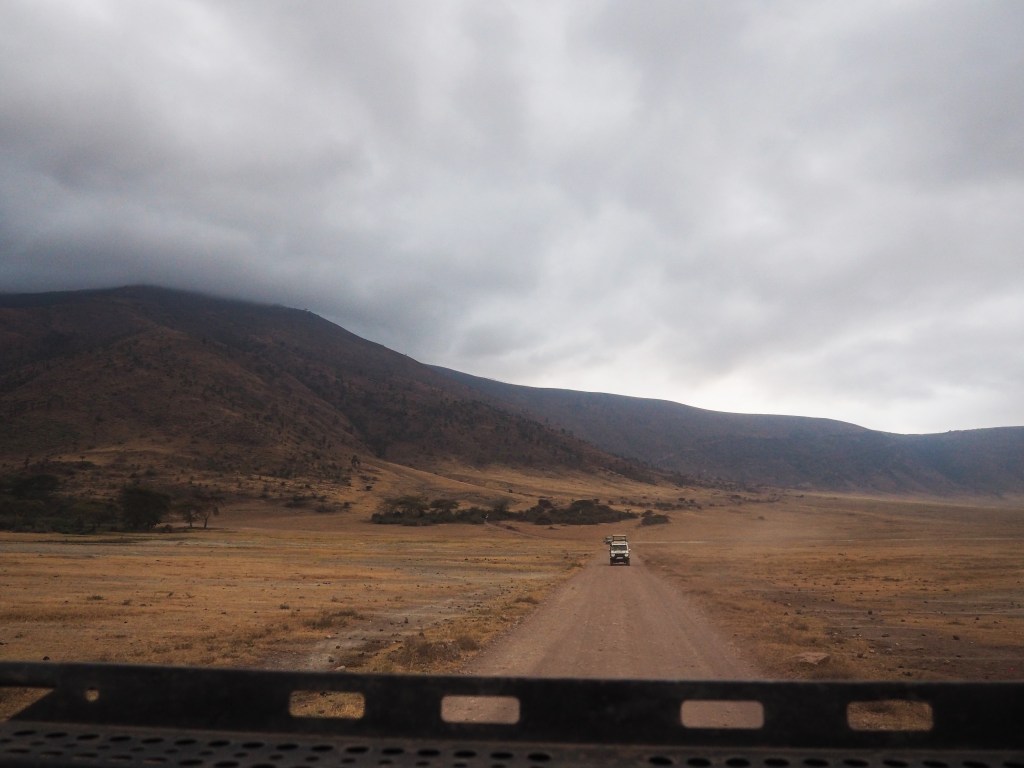
The descent road in the distance
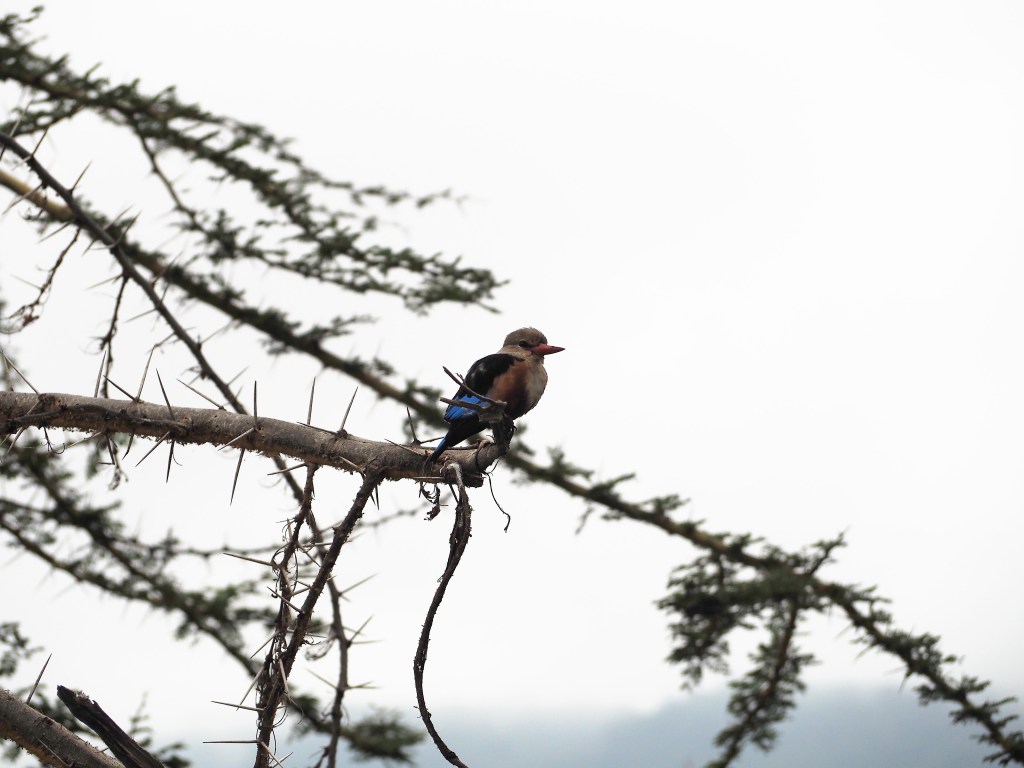
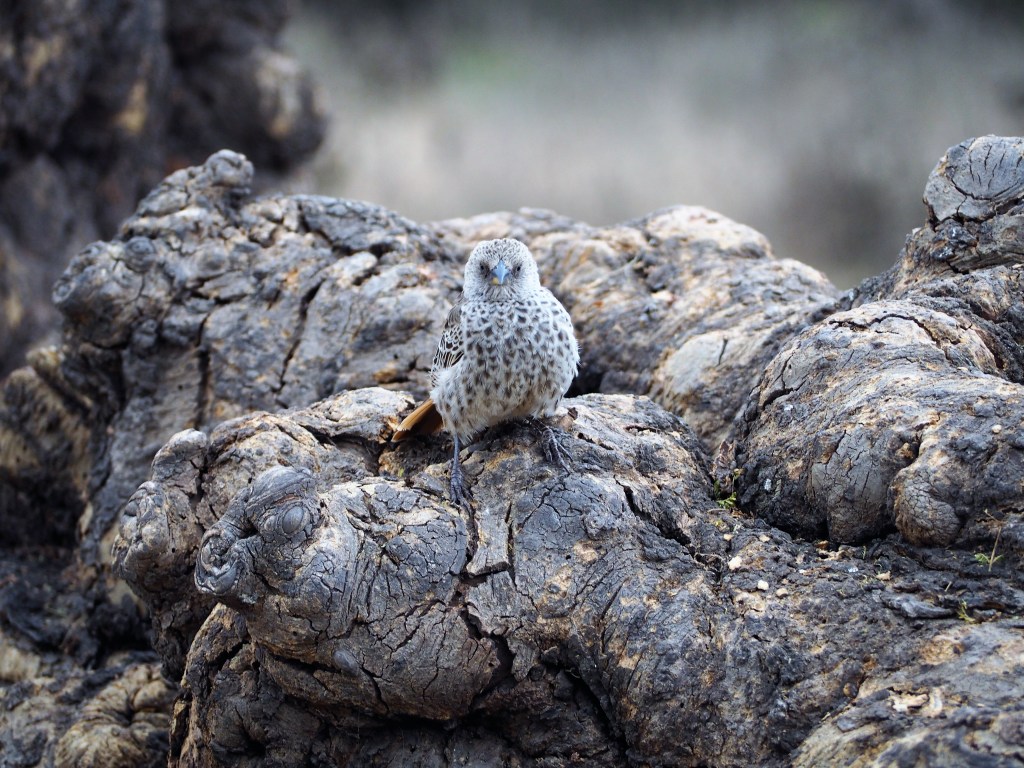
During the dry season many animals including elephants and buffalo stay on the rim where more food is available, instead of heading into the crater where it is more open and less food is readily found. We saw many of the usuals here -zebra, buffalo, wildebeest, ostrich, gazelle, warthogs, hippos, lions, and several birds.
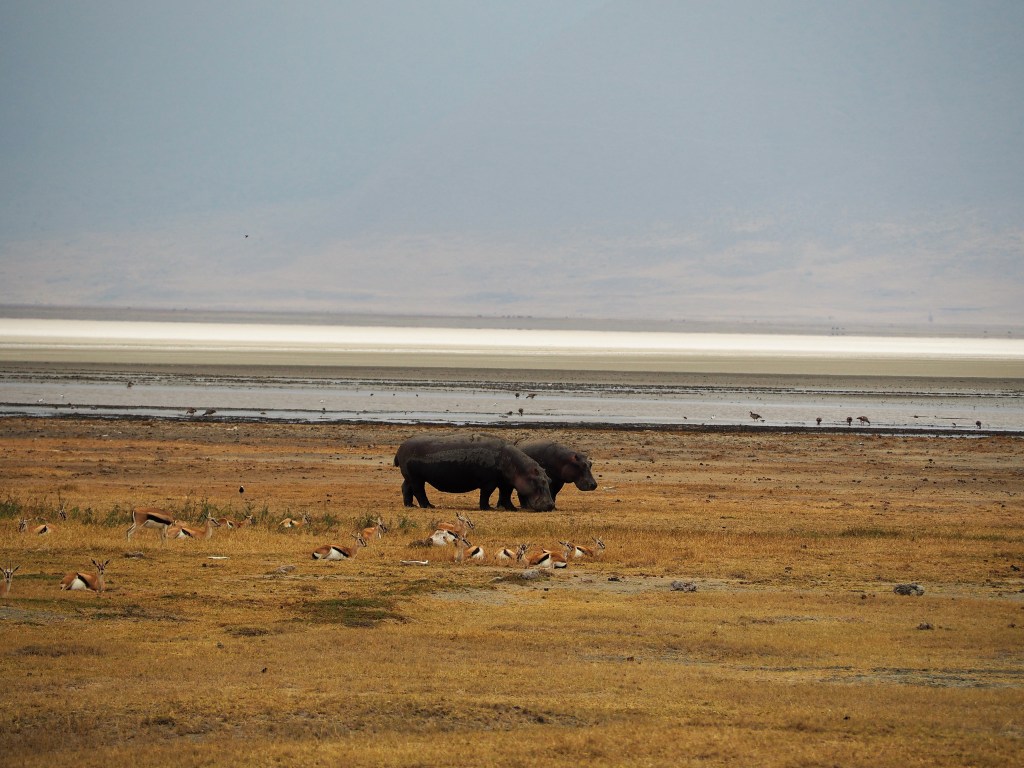
Hippos 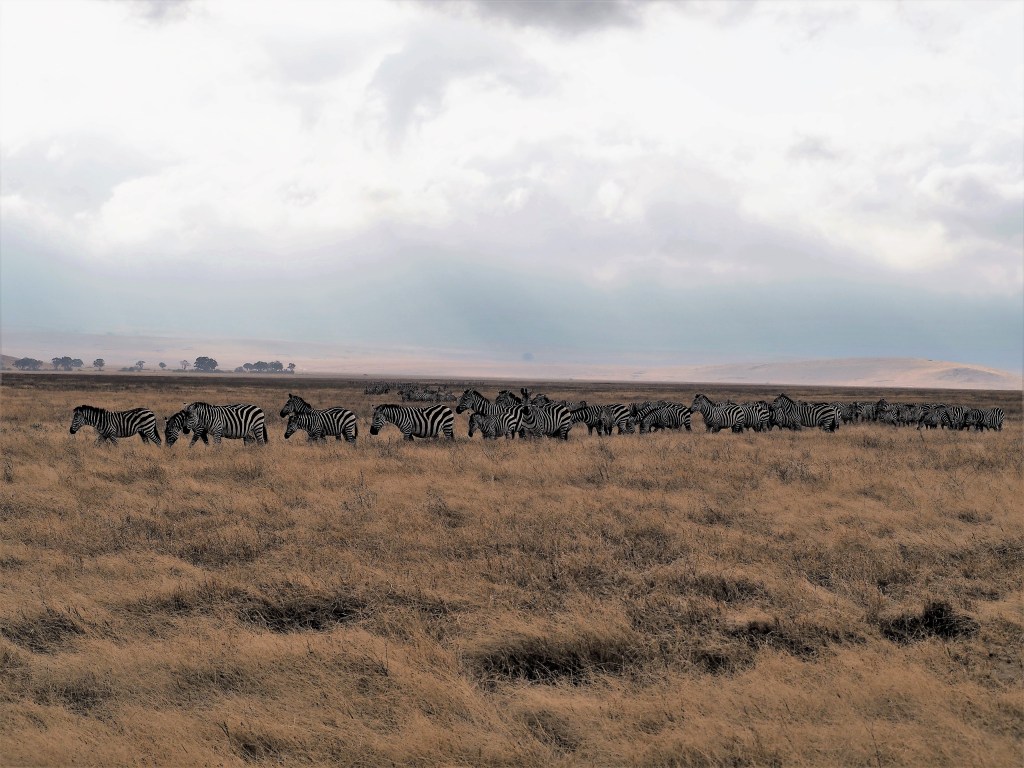
Zebra line, heading to the water
On a pit stop at Ngoitoktok Springs picnic area we spotted a rock python slithering around on the edge of the lake – apparently we were lucky to see it as they are not commonly seen!
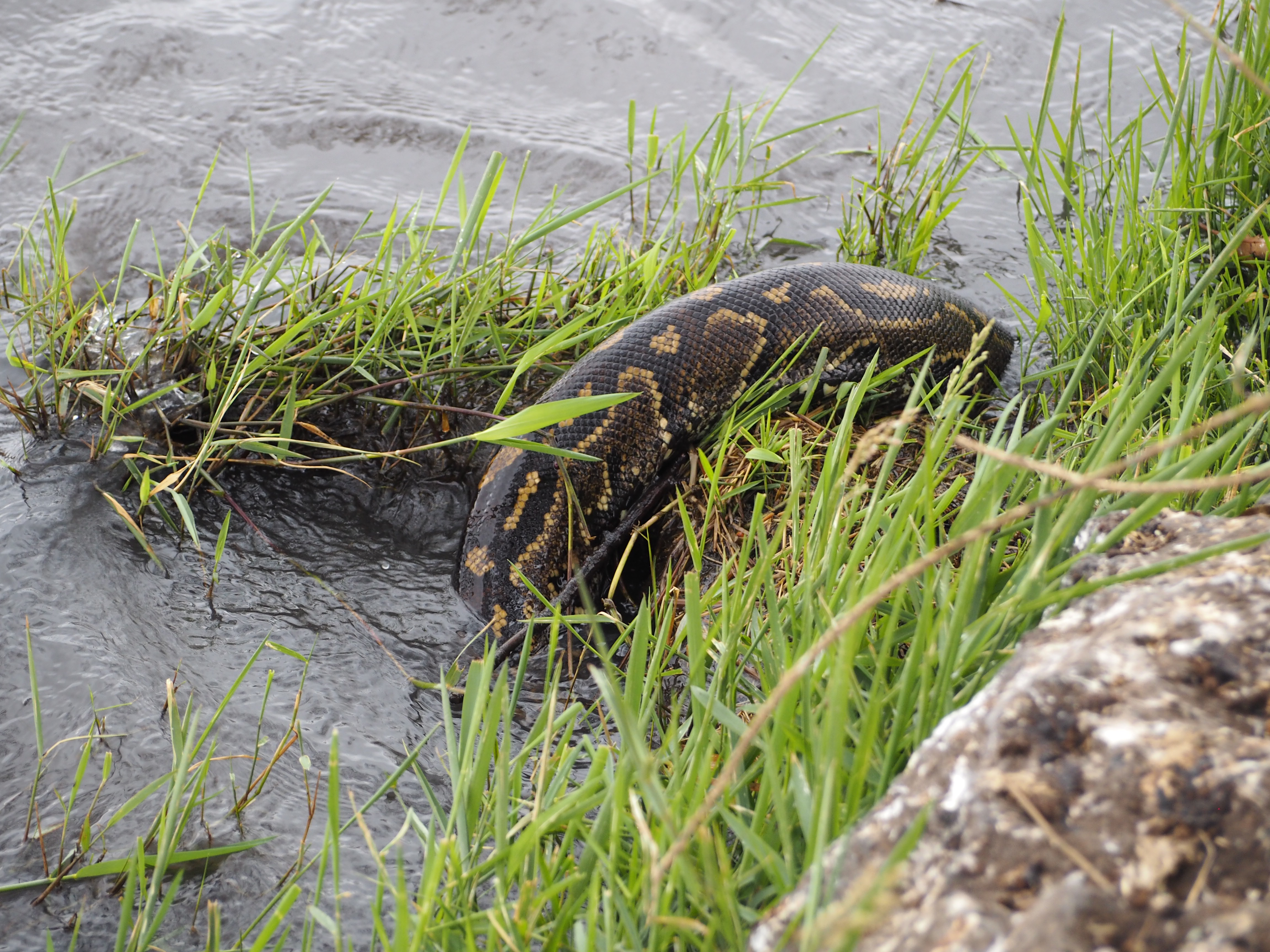
Rock python 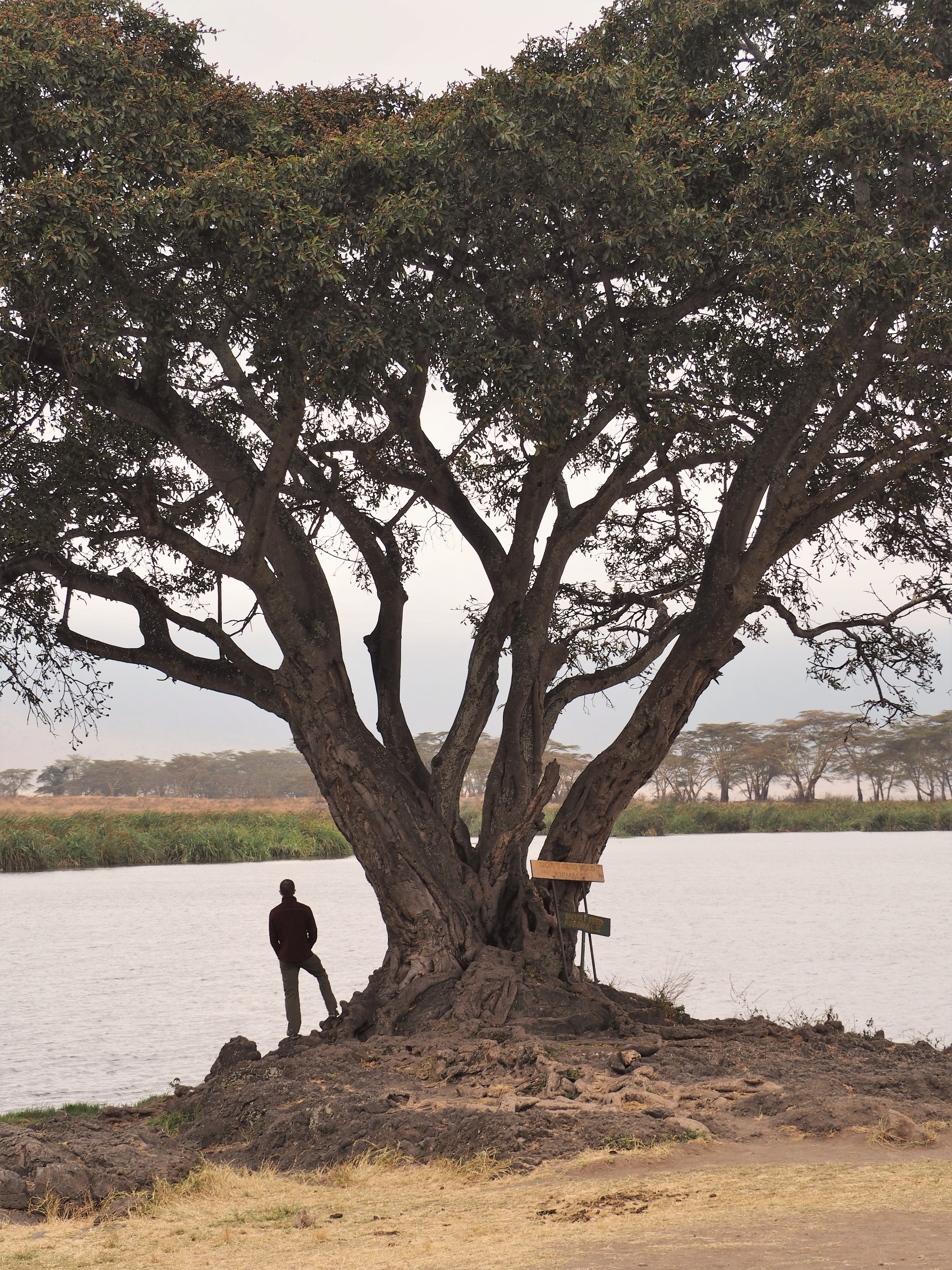
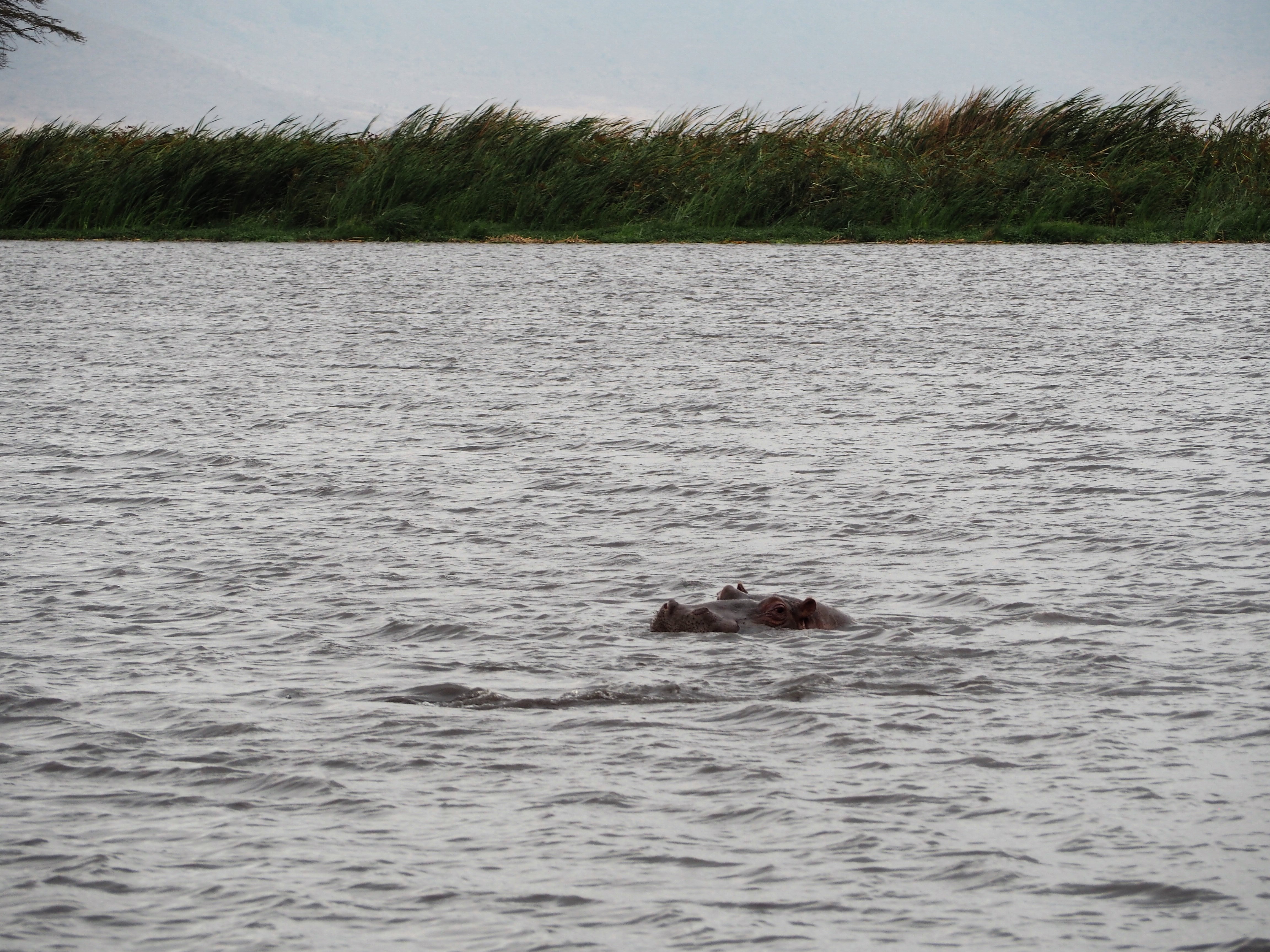
Hippo briefly catching air before sinking back under water
From the bird perspective, the secretarybird and kori bustard made an appearance, flamingos were gathered at the water, and we had our first chance to snap a shot of the crowned stork.
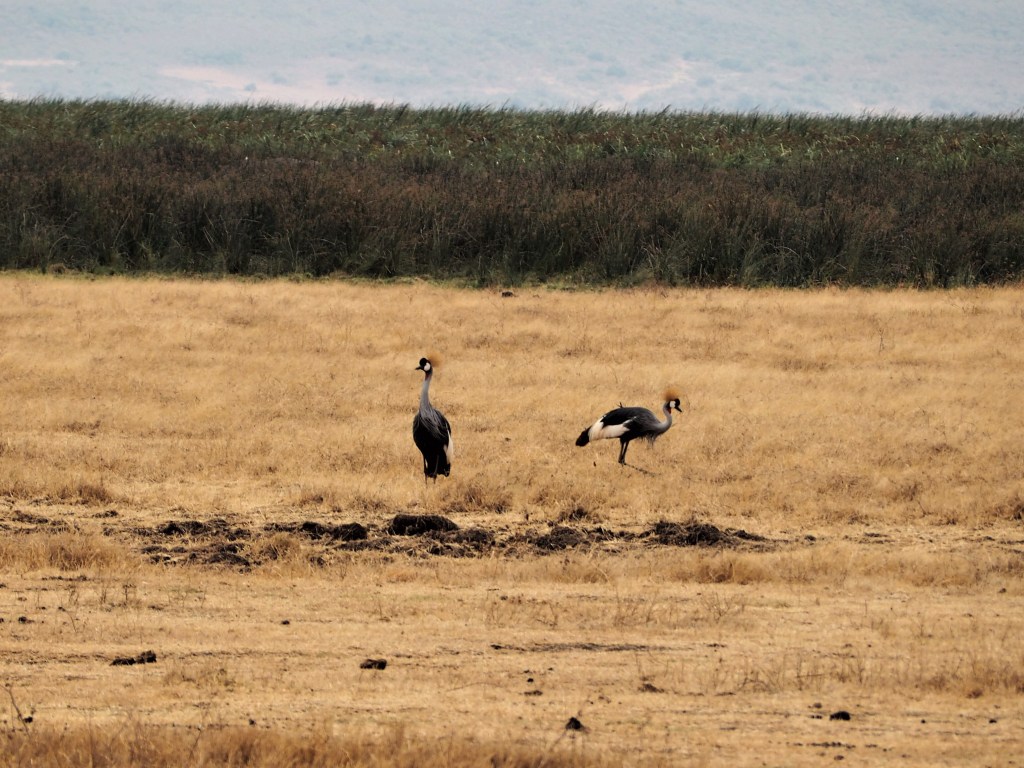
Crowned stork 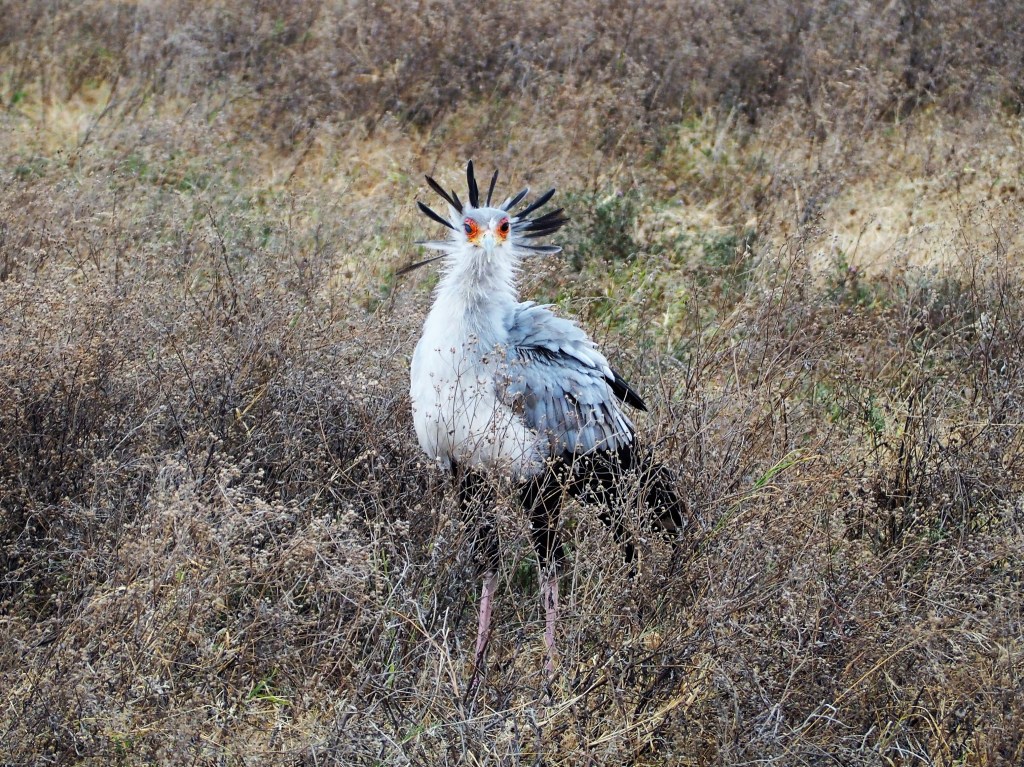
Secretarybird
The crater is a well known spot in Tanzania to see rhinos but we did not have luck with seeing them on this trip. Typically in the dry season, when the large crater lake is dried up, the rhinos don’t venture down very much but can still be seen around the crater and its rim. The animals we did see did not disappoint though!
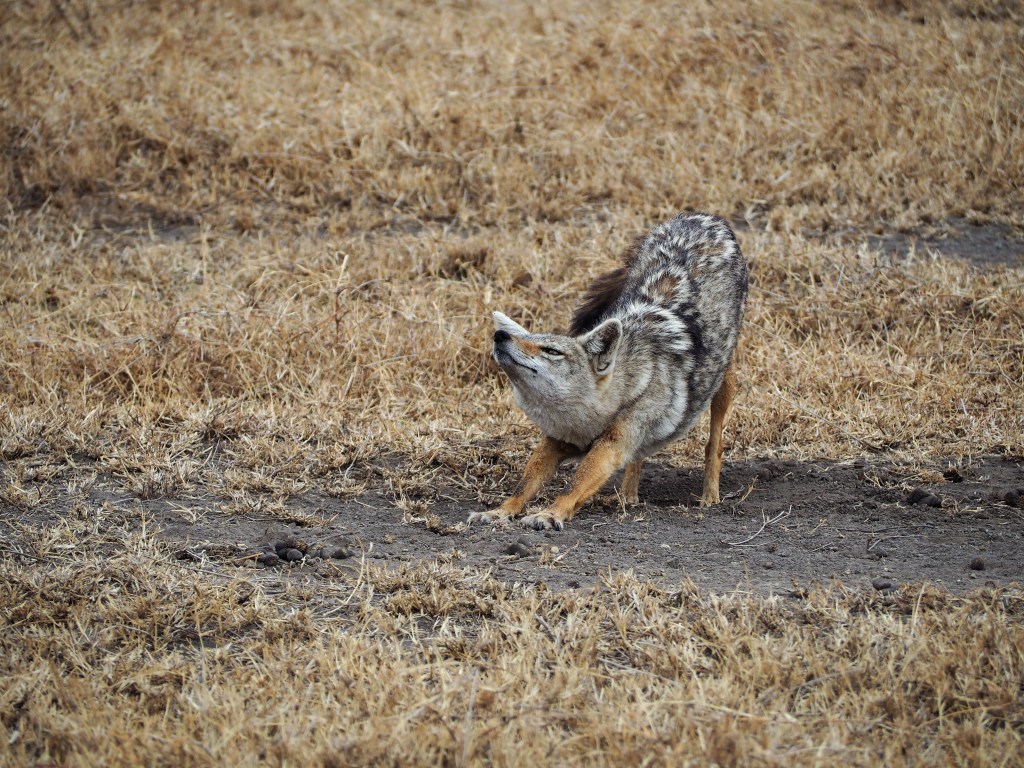
Jackal stretching after a nap 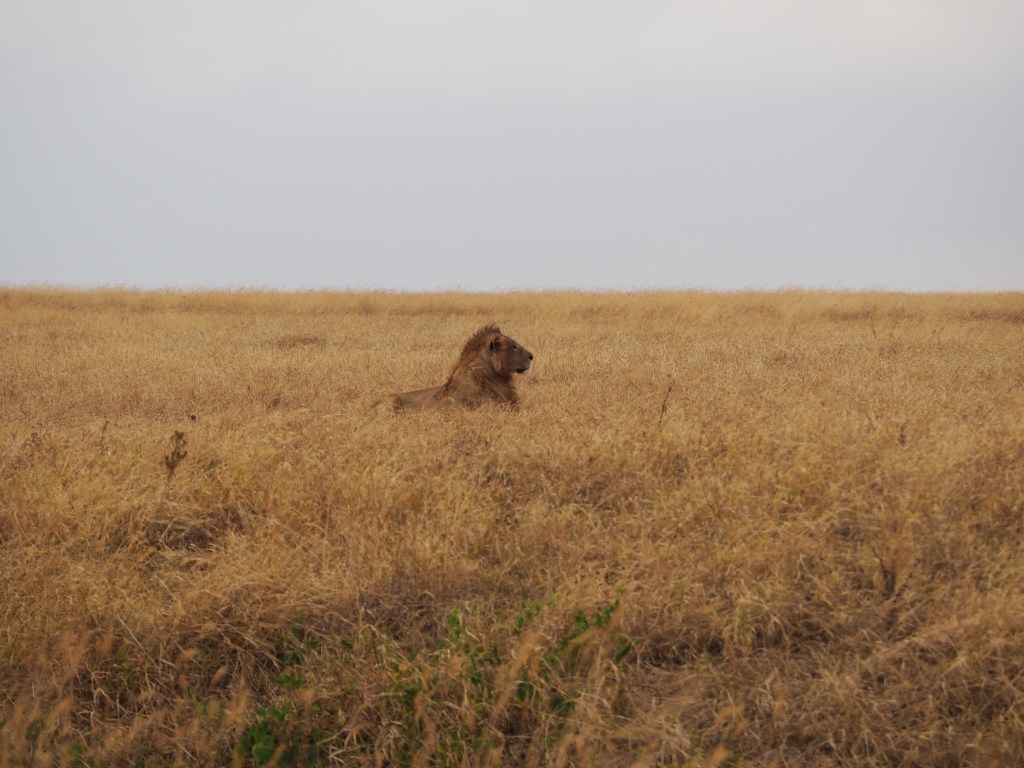
Lion blending in well
We drove through a forested area on our way to the Lerai ascent road out of the crater. We learned about the strangler fig trees – when their seeds get planted on other trees, the strangler fig essentially takes over its host tree, growing its roots down towards the ground and up through the host tree’s branches.
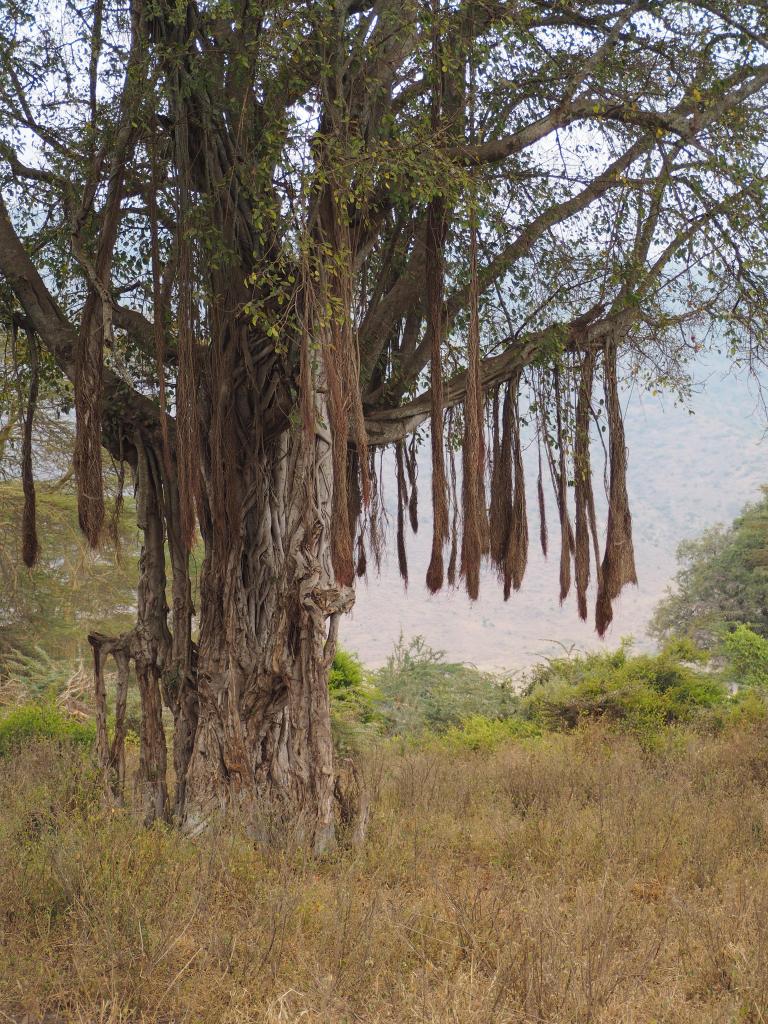
Strangler fig tree
Ascent road out of the crater 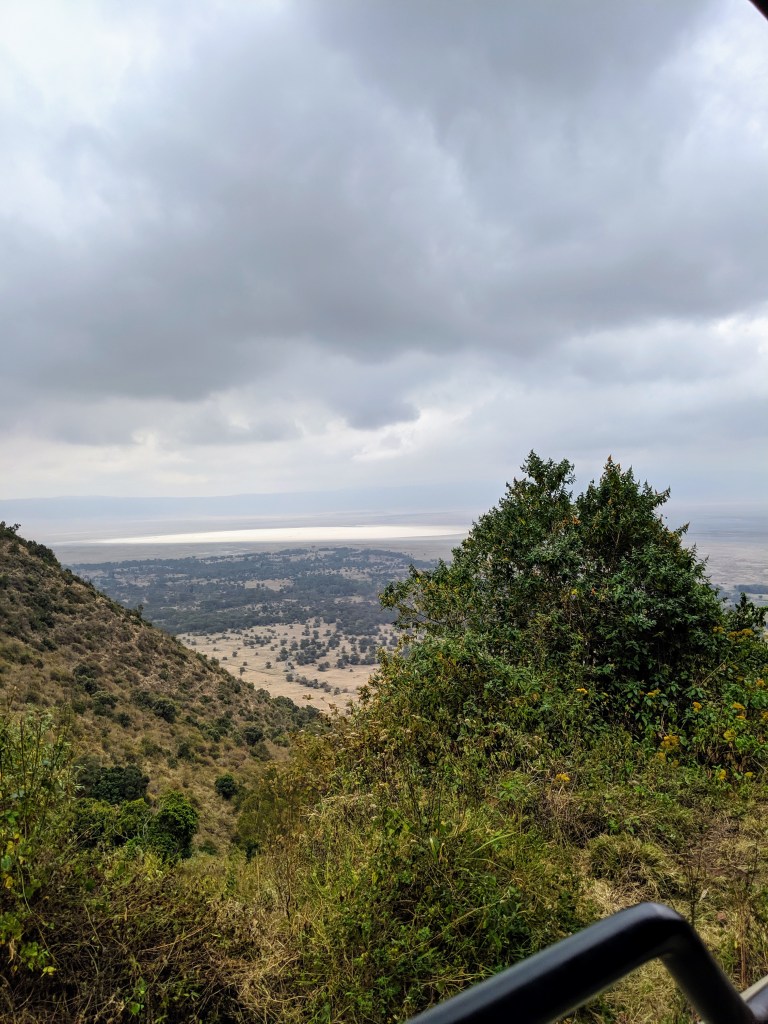
Looking back from the ascent road
 Kart Before the Horse